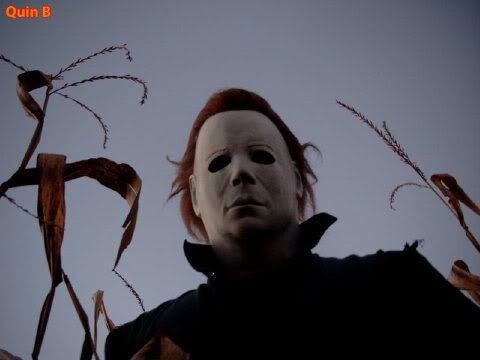
“Do you like scary movies? “
” What's the point? They're all the same, some stupid killer stalking some big-breasted girl who can't act who is always running up the stairs when she should be running out the front door, it's insulting.”- Scream, 1996 (imdb.com)
The horror genre is the black sheep of the film industry. It is usually associated with providing very lethargic plots and superficial characters. These films are usually classified as a “B- Movie”. A B-movie is defined by the B- Movie Database as one that has:
- Poor production including some of the worst special effects conceivable in a motion picture
- Bad acting
- Unknown actors and actresses or if they are known, they must be a member of the B-movie cabal of actors including the likes of Steven Segal, Lorenzo Lamas, Lance Henriksen, and Wesley Snipes
- A badly written and confusing script that either tries to be clever and intelligent or artsy and different. The end result is neither.
- An abundance of continuity errors and screw-ups that make you think the movie was filmed at the directors lakeside cottage with a bunch of drunken buddies.
- They go direct to video (bmdb.ca)
I would like to argue that horror films may appear to be “B-movies” on the surface, but there are things at work, almost subconsciously, in these films that lead to a very lucid commentary on different social issues. All sorts of different types of films deal with social issues, but the horror genre does it in the most abstract, unobtrusive way. Early monsters films like Dracula and The Thing from Another World, to the zombie films like Night of the Living Dead and 28 Days Later, to the teen-slasher films like Halloween and Scream; These movies are about much more than just scary monsters or unstoppable serial killers, they are metaphors used to comment on our social values and ideologies.
Pablo Picasso once said: “We all know that Art is not truth. Art is a lie that makes us realize truth, at least the truth that is given us to understand. The artist must know the manner whereby to convince others of the truthfulness of his lies.” (quotegarden) This quote couldn’t be applied more perfectly to any other art form than that of filmmaking. Filmmaking is one of the definitive forms of art, combining all facets of art: painting, photography, literature, music, acting and architecture. Using this quote in context of the horror film further cements the idea of how this genre is used to criticize social principles and ideologies. Who could take the story of Dracula or Night of the Living Dead at face value? The answer would be most filmgoers. That is the problem with the art of filmmaking; it is not only a form of art but also a form of entertainment.
Bram Stoker’s novel Dracula has been adapted for the screen over thirty times since 1931.The story of Dracula is not an unfamiliar one; it is about a vampire that struggles with eternal life (unless a wooden stake is driven through his heart) and the search for his bride (which he has to bite in the neck in order for her to become “undead” like Dracula is). I would like to focus on the two most superlative of the other Dracula films; The 1931 Dracula directed by Tod Browning and the 1992 Bram Stoker’s Dracula directed by Francis Ford Coppola. These two films are significantly similar, even though there was a 61 year gap between the productions of these films. The prevailing theme in both of these films is that of sexual norms. Sex is a common theme among horror films, but the context in which it is portrayed in Dracula is worth noting, especially of the 1931 version of the film. When evaluating horror films, one must always think about the time period during and before the films creation. The 1920s were just a decade before the release of Tod Browning’s Dracula.
“The 1920s had, indeed, roared. It was a decade of jazz, illicit alcohol, sexual promiscuity, and gender confusion. The epitome of the Roaring Twenties was the “flapper”- a liberated woman of the jazz age who cut her hair short and began wearing trousers….As with other areas of culture, the 1920s represented a period of great moral experimentation within the seemingly secure envelope of American political and economic stability. The 1930s, on the other hand, brought this stability to a crashing end.” (Phillips 2005)
So in this context, we could deduce that Dracula represents the antagonist’s need for “normalcy”. Dracula represents everything that the people whose lives he invades are not. He is not living nor dead, not human nor animal, nor grounded in present time being that he is quasi-immortal. But the biggest issue here is the sexual norms and confusion that is most salient. Film critic Roger Ebert has addressed this topic: “The vampire Dracula has been the subject of more than thirty films; something deep within the legend is suited to cinema. Perhaps it is the joining of eroticism and terror”. (rogerebert.com) Being the early 1930s, sexuality was still a very taboo matter, especially after the untamed 1920s. The film came out right around the time prohibition ended, and the end of the jazz age where marijuana smoking and sexuality was being explored. Dracula represents the primal instinct of sexual appetite, and he uses his charm to accomplish this: by wooing his women and then going in for the “fatal kiss”. Mina, the female lead in which Dracula is attempting to take her human life and making her into his “vampire bride”, almost falls prey to Dracula’s attempts at seduction. “When Mina begins to change into a vampire she states that she would rather die than become a threat to anyone she loves. Van Helsing responds, “you must not die…your salvation is his destruction”. Thus Mina’s salvation- and indeed the salvation of all- lies in her resistance to Dracula’s sexuality; that is, her ability to place and enforce limits on the primitive, violent extravagances he represents.” (Wyman and Dionisopoulos 1999) And this is just one of many cultural concerns that are touched upon in Dracula; there is also the issue of Dracula being a foreigner (seemingly European), also a wealthy individual (this movie came out right after the Great Depression), and also it has been debated whether there are homosexual undertones in the film as well. So as you can see, this simple story of a vampire has a lot more to it than just a thrilling story of a scary monster-like being.
Resonating from the social commentary of the Dracula films comes the teen-slasher sub-genre of horror film. These are the most well known and most profitable of horror movies, because they are obviously aimed at the teenage audience. These films are the campiest of the horror film genre, with an almost superfluous amount of sequels: Halloween has 9 sequels, A Nightmare on Elm Street has 8 and Friday the 13th totals in with a whopping 11 sequels. The most discussed and written about of these three franchises is the Halloween franchise. In 1978, John Carpenter’s Halloween shocked
There are certain RULES that one must abide by in order to successfully survive a horror movie. For instance, number one: you can never have sex. BIG NO NO! BIG NO NO! Sex equals death, okay? Number two: you can never drink or do drugs. The sin factor! It's a sin. It's an extension of number one.” (imdb.com)
Now these first two rules are an accurate description of the “rules” that are broken in the film Halloween and many other slasher films. This phenomenon is examined by Fred Molitor and Barry Sapolsky in a study done on sex and violence in slasher films: they found that “slasher films contained an average of 3.1 incidents per film in which a sexual display or behavior occurred immediately preceding or at the time of violence.” (Sapolsky, Moltor, and Luque 2003) These rules don’t even have to be applied to the horror film; they can be the “rules” set out by the conservative public during the 1970s disco movement; one that was full of sexual exploration and drug use and also 1970s rock and roll music and teenage rebellion. These are the kids that come from the post-counterculture movement, whose parents are from the pre-counterculture movement; Two completely different schools of thought on social norms and ideologies. One thing that is rather conspicuous in Halloween is the absence of the parents of both Michael Meyers and the teenagers he stalks and murders. “Michael’s parents appear only after the murder of his sister. Laurie’s father is viewed only briefly early in the film as he asks his daughter to drop off the keys at the Meyers’s house. In this regard, the role of both sets of parents is to facilitate the subsequent crimes. Michael’s negligent parents set the stage for all the murderous acts in the film.” (Phillips 2005) With the absence of their parents, the teenagers in Halloween, with the exception of Laurie, engage in premarital sex, drug use and alcohol consumption. This is faithful to what Randy from Scream warned about; these rebellious teenagers are acting outside of the social norms of their parents’ generation, and they are punished accordingly by Michael Meyers. All except one that is: the character of Laurie. She is the one that doesn’t take part in the drug use or fornication that her friends are engaging in. She stays at home with Tommy, the boy she is babysitting, while her licentious friends are out and about. It could be this simple fact that Laurie is being the “mother figure” for these children while her friends are lacking that “mother figure” for the time being, which leads to their deviant behavior and ultimately, their demise.
Laurie learns the hard facts of teen slasher films: family is more often a hindrance than a help, law enforcement is suspicious and ineffective, and surviving into adulthood demands a full comprehension of and a comparable response to savage evil. (Gill 2002)
This leads to the second archetype of the slasher film: the “final girl”. It is almost a trite fact that the slasher movie must contain the “final girl” lead role. The “final girl” can be defined as:
After all her friends have been eliminated by the film’s monster, this girl is the one who recognizes the horror surrounding her and fights back against her attacker and defeats him, typically single-handedly. She is the undisputed main character, both because of increased character development afforded to her through the film and because of her early discovery of the killer. (Trencansky 2001)
In Halloween, as well as the other two fundamental slasher franchises Nightmare on Elm Street and Friday the 13th, there is the existence of the “final girl”. As for Laurie Strode in Halloween, she is the quasi-embodiment of the “final girl”, seeing that she is the one that is celibate, more intelligent and also more masculine than her female companions. She almost single-handedly defeats Michael Meyers, the punisher of sexual deviance, by the end of the film. Both in Dracula and in Halloween, the antagonist is overcome by the female victim. Also, both Michael Meyers and Dracula use a sexual symbol as a means of murder; Michael with his phallic butcher’s knife and Dracula with his “kiss” of death on the neck. Both of these films were released shortly after a cultural revolution of sorts. Slasher films are considered sexist by those who merely see the victims as mostly female, a purely patriarchal society where the men are the powerful “killers” and the females as the defenseless victims. On the contrary, these films are seen as taking a feminist viewpoint by both scholars and critics alike. All of the teen slasher films have one thing in common: the “final girl”.
Abject terror may still be gendered feminine, but the willingness of one immensely popular current genre to represent the hero as an anatomical female would seem to suggest that at least one of the traditional marks of heroism, triumphant self-rescue, is no longer gendered masculine. (as cited in Conelly 2007).
The original Halloween treats Laurie as the “final girl” to an extent; she does everything in her power to fight off Michael Meyers, with quite an effect, but does not completely “kill” him. It is Michael’s psychiatrist, Dr. Loomis, whom ultimately “kills” Michael at the end, but not without the help of Laurie. After Halloween’s success, there was a plethora of impersonators, most notable Friday the 13th and Nightmare on
The heroines of the 1980’s series go much further than simply defending themselves, matching or exceeding the powers of their monsters with their own. This is most pronounced in the Nightmare on Elm Street series, beginning with the heroine of the first film,
In A Nightmare on Elm Street, unlike Laurie Strode of Halloween, Nancy is unable to rely on a male to help her defeat the “monster”, as shown in the scene where she has her boyfriend “stand guard” while she tries to fight Freddy Kruger in her dream. When Halloween was released, the feminist movement was in the middle of its second phase, while when A Nightmare on Elm Street was released, the second phase of the feminist movement was coming to a close. This is can be paralleled to the “final girl” from Halloween and the “final girl” from A Nightmare on Elm Street. By the end of Nightmare,
Another horror film that is full of social commentary and metaphors for a cultural movement are the zombie films Night of the Living Dead and Dawn of the Dead by George A. Romero. The former of these two films was released in 1968, the year of Martin Luther King Jr’s assassination and the heart of the counterculture revolution. “The film has been widely interpreted as a comment on the Civil Rights struggle and the Vietnam War, both at the forefront of the American public’s consciousness in 1968.” (Marriott 2004) The social commentary by use of metaphor in this film is more conspicuous than the two previously discussed films Halloween and Dracula. The first thing to notice is the use of an African American actor as the lead character, Ben. This was one of the first films to use an African American as the protagonist of a film. The metaphorical use of the zombies is also quite clear; they are the “bumbling masses”, or mainstream society. The people that take refuge from the zombies inside of a cabin, they are the rebels, the “hippies” so to speak.
More than any other archetypal character in the popular imaginary, we suggest the figure of the zombie best illustrates the underlying anxieties that communication scholars in the early and mid 20th century
harbored in respect to ideology. The evolution of the zombie from a mindless source of labor to a ravenous agent of consumption helps to illustrate how the general understanding of ideology has shifted from the so-called ‘‘magic bullet’’ model to that of a structuralist ‘‘interpellation.’’ Such an approach to understanding the concept of ideology is useful because it produces an introduction to the complexities of ideology
critique that is inclusive of the anxieties fueling critical invention. (Gunn and Treat 2005)
The zombies of Night of the Living Dead are the mindless mass of consumers and ideologies. By the obvious symbolic resistance of these zombies, the metaphor goes one step further with the television reports suggesting that shooting them in the brain is the only way to stop them. It almost seems ironic that to stop these mindless zombies is to shoot them through their nonfunctioning brain. The most talked about message of the film is that of Ben’s ultimate demise. He survives the zombie attack until the very end of the film, boarding himself up in the basement. By this time, all of the people sharing the cabin with him have now been devoured by the zombies. With only a few minutes of the film left, a “posse” of policemen and countrymen alike, led by the sheriff, start making their way towards the cabin that Ben is shacked up in. When he sees them, Ben tries to get outside of a window to greet them, only to be shot “in the brain”, as the TV suggests to do. These final images have been disturbing for many, seeing as to how cynical this film is, that there is no hope in defeating the masses or the government.
The all-white cracker posse at the end of the film recalls a lynch mob in its appearance, and a platoon of soldiers in its laconic banter while shooting anything that moves; it’s impossible not to associate such hand-held black and white imagery, or the grainy stills of Ben’s corpse being tossed onto a pyre, with the newsreel footage- of Kent State, Vietnam and the protest movement- burning its way into the American psyche at the time. (Marriott 2004)
This is why one should always take into account the point in time of a horror film’s release, as it could open your eyes to some very profound metaphors or motifs that you would never have even thought about before or after seeing such a film. Although zombies have been present in films dating back to the 1920’s, George A. Romero created something that transcended the zombie; he created the “living dead”. They are never called “zombies” in any of his films, which is also something to note. They are the “living dead”, they are people like you and I; one’s that have been brought back to life functioning on nothing but motor skills and instinct. This leads to the consumerism commentary in Dawn of the Dead, Romero’s sequel to Night of the Living Dead. In this film, the living dead flock to a mall, where a group of survivors take refuge. One character asks in the film:
Francine Parker: What are they doing? Why do they come here?
Stephen: Some kind of instinct. Memory, of what they used to do. This was an important place in their lives. (imdb.com)
This almost satirical comment says a lot in terms of consumerism of that had a surge in the mid to late 70’s and has continued on ever since. Zombies have been used in many different films as metaphor for different social issues. Danny Boyle’s recent zombie film 28 Days Later, for example, is a commentary on the near-mad cow disease breakout that happened a few years ago. The film was to show us how easily something like this could happen, simply from eating a hamburger.
After reviewing horror films like Dracula, Halloween, A Nightmare on


No comments:
Post a Comment