Friday, December 12, 2008

They're Coming For You Barbra


Do you like scary movies? “
” What's the point? They're all the same, some stupid killer stalking some big-breasted girl who can't act who is always running up the stairs when she should be running out the front door, it's insulting.”-
Scream, 1996 (imdb.com)


The horror genre is the black sheep of the film industry. It is usually associated with providing very lethargic plots and superficial characters. These films are usually classified as a “B- Movie”. A B-movie is defined by the B- Movie Database as one that has:

  1. Poor production including some of the worst special effects conceivable in a motion picture
  2. Bad acting
  3. Unknown actors and actresses or if they are known, they must be a member of the B-movie cabal of actors including the likes of Steven Segal, Lorenzo Lamas, Lance Henriksen, and Wesley Snipes
  4. A badly written and confusing script that either tries to be clever and intelligent or artsy and different. The end result is neither.
  5. An abundance of continuity errors and screw-ups that make you think the movie was filmed at the directors lakeside cottage with a bunch of drunken buddies.
  6. They go direct to video (bmdb.ca)

I would like to argue that horror films may appear to be “B-movies” on the surface, but there are things at work, almost subconsciously, in these films that lead to a very lucid commentary on different social issues. All sorts of different types of films deal with social issues, but the horror genre does it in the most abstract, unobtrusive way. Early monsters films like Dracula and The Thing from Another World, to the zombie films like Night of the Living Dead and 28 Days Later, to the teen-slasher films like Halloween and Scream; These movies are about much more than just scary monsters or unstoppable serial killers, they are metaphors used to comment on our social values and ideologies.

Pablo Picasso once said: “We all know that Art is not truth. Art is a lie that makes us realize truth, at least the truth that is given us to understand. The artist must know the manner whereby to convince others of the truthfulness of his lies.” (quotegarden) This quote couldn’t be applied more perfectly to any other art form than that of filmmaking. Filmmaking is one of the definitive forms of art, combining all facets of art: painting, photography, literature, music, acting and architecture. Using this quote in context of the horror film further cements the idea of how this genre is used to criticize social principles and ideologies. Who could take the story of Dracula or Night of the Living Dead at face value? The answer would be most filmgoers. That is the problem with the art of filmmaking; it is not only a form of art but also a form of entertainment.

Bram Stoker’s novel Dracula has been adapted for the screen over thirty times since 1931.The story of Dracula is not an unfamiliar one; it is about a vampire that struggles with eternal life (unless a wooden stake is driven through his heart) and the search for his bride (which he has to bite in the neck in order for her to become “undead” like Dracula is). I would like to focus on the two most superlative of the other Dracula films; The 1931 Dracula directed by Tod Browning and the 1992 Bram Stoker’s Dracula directed by Francis Ford Coppola. These two films are significantly similar, even though there was a 61 year gap between the productions of these films. The prevailing theme in both of these films is that of sexual norms. Sex is a common theme among horror films, but the context in which it is portrayed in Dracula is worth noting, especially of the 1931 version of the film. When evaluating horror films, one must always think about the time period during and before the films creation. The 1920s were just a decade before the release of Tod Browning’s Dracula.

“The 1920s had, indeed, roared. It was a decade of jazz, illicit alcohol, sexual promiscuity, and gender confusion. The epitome of the Roaring Twenties was the “flapper”- a liberated woman of the jazz age who cut her hair short and began wearing trousers….As with other areas of culture, the 1920s represented a period of great moral experimentation within the seemingly secure envelope of American political and economic stability. The 1930s, on the other hand, brought this stability to a crashing end.” (Phillips 2005)

So in this context, we could deduce that Dracula represents the antagonist’s need for “normalcy”. Dracula represents everything that the people whose lives he invades are not. He is not living nor dead, not human nor animal, nor grounded in present time being that he is quasi-immortal. But the biggest issue here is the sexual norms and confusion that is most salient. Film critic Roger Ebert has addressed this topic: “The vampire Dracula has been the subject of more than thirty films; something deep within the legend is suited to cinema. Perhaps it is the joining of eroticism and terror”. (rogerebert.com) Being the early 1930s, sexuality was still a very taboo matter, especially after the untamed 1920s. The film came out right around the time prohibition ended, and the end of the jazz age where marijuana smoking and sexuality was being explored. Dracula represents the primal instinct of sexual appetite, and he uses his charm to accomplish this: by wooing his women and then going in for the “fatal kiss”. Mina, the female lead in which Dracula is attempting to take her human life and making her into his “vampire bride”, almost falls prey to Dracula’s attempts at seduction. “When Mina begins to change into a vampire she states that she would rather die than become a threat to anyone she loves. Van Helsing responds, “you must not die…your salvation is his destruction”. Thus Mina’s salvation- and indeed the salvation of all- lies in her resistance to Dracula’s sexuality; that is, her ability to place and enforce limits on the primitive, violent extravagances he represents.” (Wyman and Dionisopoulos 1999) And this is just one of many cultural concerns that are touched upon in Dracula; there is also the issue of Dracula being a foreigner (seemingly European), also a wealthy individual (this movie came out right after the Great Depression), and also it has been debated whether there are homosexual undertones in the film as well. So as you can see, this simple story of a vampire has a lot more to it than just a thrilling story of a scary monster-like being.

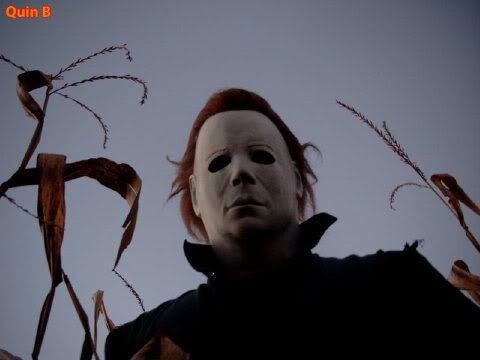
Resonating from the social commentary of the Dracula films comes the teen-slasher sub-genre of horror film. These are the most well known and most profitable of horror movies, because they are obviously aimed at the teenage audience. These films are the campiest of the horror film genre, with an almost superfluous amount of sequels: Halloween has 9 sequels, A Nightmare on Elm Street has 8 and Friday the 13th totals in with a whopping 11 sequels. The most discussed and written about of these three franchises is the Halloween franchise. In 1978, John Carpenter’s Halloween shocked America, mainly its youth. The film tells the story of Lori Strode and how she and her friends come to be stalked by the maniacal killer Michael Meyers. Michael Meyers murdered his sister (after she was finished having sex with her boyfriend instead of babysitting Michael) when he was 6 years old, then 15 years later returned to his hometown to go on a killing spree. On one level, this is all there is to be told about the story of Halloween. On another level, it is the story of sexuality, feminism, and the cultural standards of the time. In the Wes Craven’s film Scream, a film-geek named Randy tells his friends some of the “rules” of the slasher genre:

There are certain RULES that one must abide by in order to successfully survive a horror movie. For instance, number one: you can never have sex. BIG NO NO! BIG NO NO! Sex equals death, okay? Number two: you can never drink or do drugs. The sin factor! It's a sin. It's an extension of number one.” (imdb.com)

Now these first two rules are an accurate description of the “rules” that are broken in the film Halloween and many other slasher films. This phenomenon is examined by Fred Molitor and Barry Sapolsky in a study done on sex and violence in slasher films: they found that “slasher films contained an average of 3.1 incidents per film in which a sexual display or behavior occurred immediately preceding or at the time of violence.” (Sapolsky, Moltor, and Luque 2003) These rules don’t even have to be applied to the horror film; they can be the “rules” set out by the conservative public during the 1970s disco movement; one that was full of sexual exploration and drug use and also 1970s rock and roll music and teenage rebellion. These are the kids that come from the post-counterculture movement, whose parents are from the pre-counterculture movement; Two completely different schools of thought on social norms and ideologies. One thing that is rather conspicuous in Halloween is the absence of the parents of both Michael Meyers and the teenagers he stalks and murders. “Michael’s parents appear only after the murder of his sister. Laurie’s father is viewed only briefly early in the film as he asks his daughter to drop off the keys at the Meyers’s house. In this regard, the role of both sets of parents is to facilitate the subsequent crimes. Michael’s negligent parents set the stage for all the murderous acts in the film.” (Phillips 2005) With the absence of their parents, the teenagers in Halloween, with the exception of Laurie, engage in premarital sex, drug use and alcohol consumption. This is faithful to what Randy from Scream warned about; these rebellious teenagers are acting outside of the social norms of their parents’ generation, and they are punished accordingly by Michael Meyers. All except one that is: the character of Laurie. She is the one that doesn’t take part in the drug use or fornication that her friends are engaging in. She stays at home with Tommy, the boy she is babysitting, while her licentious friends are out and about. It could be this simple fact that Laurie is being the “mother figure” for these children while her friends are lacking that “mother figure” for the time being, which leads to their deviant behavior and ultimately, their demise.

Laurie learns the hard facts of teen slasher films: family is more often a hindrance than a help, law enforcement is suspicious and ineffective, and surviving into adulthood demands a full comprehension of and a comparable response to savage evil. (Gill 2002)

This leads to the second archetype of the slasher film: the “final girl”. It is almost a trite fact that the slasher movie must contain the “final girl” lead role. The “final girl” can be defined as:

After all her friends have been eliminated by the film’s monster, this girl is the one who recognizes the horror surrounding her and fights back against her attacker and defeats him, typically single-handedly. She is the undisputed main character, both because of increased character development afforded to her through the film and because of her early discovery of the killer. (Trencansky 2001)

In Halloween, as well as the other two fundamental slasher franchises Nightmare on Elm Street and Friday the 13th, there is the existence of the “final girl”. As for Laurie Strode in Halloween, she is the quasi-embodiment of the “final girl”, seeing that she is the one that is celibate, more intelligent and also more masculine than her female companions. She almost single-handedly defeats Michael Meyers, the punisher of sexual deviance, by the end of the film. Both in Dracula and in Halloween, the antagonist is overcome by the female victim. Also, both Michael Meyers and Dracula use a sexual symbol as a means of murder; Michael with his phallic butcher’s knife and Dracula with his “kiss” of death on the neck. Both of these films were released shortly after a cultural revolution of sorts. Slasher films are considered sexist by those who merely see the victims as mostly female, a purely patriarchal society where the men are the powerful “killers” and the females as the defenseless victims. On the contrary, these films are seen as taking a feminist viewpoint by both scholars and critics alike. All of the teen slasher films have one thing in common: the “final girl”.

Abject terror may still be gendered feminine, but the willingness of one immensely popular current genre to represent the hero as an anatomical female would seem to suggest that at least one of the traditional marks of heroism, triumphant self-rescue, is no longer gendered masculine. (as cited in Conelly 2007).

The original Halloween treats Laurie as the “final girl” to an extent; she does everything in her power to fight off Michael Meyers, with quite an effect, but does not completely “kill” him. It is Michael’s psychiatrist, Dr. Loomis, whom ultimately “kills” Michael at the end, but not without the help of Laurie. After Halloween’s success, there was a plethora of impersonators, most notable Friday the 13th and Nightmare on Elm Street. Both of these films used the same formulas: promiscuous teenagers using drugs and alcohol, ultimately being hunted by a maniacal serial killer. These films also took the role of the “final girl” and defined it for the rest of the slasher genre, but not without Halloween developing the “final girl” role first. In both Friday the 13th and A Nightmare on Elm Street, the female protagonist defeats the killer single-handedly.

The heroines of the 1980’s series go much further than simply defending themselves, matching or exceeding the powers of their monsters with their own. This is most pronounced in the Nightmare on Elm Street series, beginning with the heroine of the first film, Nancy. Nancy recognizes early in the film that Freddy is responsible for the deaths of her peers, and she takes immediate action. Beyond merely haphazardly defending herself, Nancy draws up a precise plan of action, timed to the very minute. (Trencansky 2001)

In A Nightmare on Elm Street, unlike Laurie Strode of Halloween, Nancy is unable to rely on a male to help her defeat the “monster”, as shown in the scene where she has her boyfriend “stand guard” while she tries to fight Freddy Kruger in her dream. When Halloween was released, the feminist movement was in the middle of its second phase, while when A Nightmare on Elm Street was released, the second phase of the feminist movement was coming to a close. This is can be paralleled to the “final girl” from Halloween and the “final girl” from A Nightmare on Elm Street. By the end of Nightmare, Nancy stands up to Freddy, resisting his attempts at killing her by merely standing up for herself and turning her back on him. No longer are women afraid to stand up to the dominating men and are ready to fight back, as shown with Nancy’s resistance to Freddy Kruger.

Another horror film that is full of social commentary and metaphors for a cultural movement are the zombie films Night of the Living Dead and Dawn of the Dead by George A. Romero. The former of these two films was released in 1968, the year of Martin Luther King Jr’s assassination and the heart of the counterculture revolution. “The film has been widely interpreted as a comment on the Civil Rights struggle and the Vietnam War, both at the forefront of the American public’s consciousness in 1968.” (Marriott 2004) The social commentary by use of metaphor in this film is more conspicuous than the two previously discussed films Halloween and Dracula. The first thing to notice is the use of an African American actor as the lead character, Ben. This was one of the first films to use an African American as the protagonist of a film. The metaphorical use of the zombies is also quite clear; they are the “bumbling masses”, or mainstream society. The people that take refuge from the zombies inside of a cabin, they are the rebels, the “hippies” so to speak.

More than any other archetypal character in the popular imaginary, we suggest the figure of the zombie best illustrates the underlying anxieties that communication scholars in the early and mid 20th century

harbored in respect to ideology. The evolution of the zombie from a mindless source of labor to a ravenous agent of consumption helps to illustrate how the general understanding of ideology has shifted from the so-called ‘‘magic bullet’’ model to that of a structuralist ‘‘interpellation.’’ Such an approach to understanding the concept of ideology is useful because it produces an introduction to the complexities of ideology

critique that is inclusive of the anxieties fueling critical invention. (Gunn and Treat 2005)

The zombies of Night of the Living Dead are the mindless mass of consumers and ideologies. By the obvious symbolic resistance of these zombies, the metaphor goes one step further with the television reports suggesting that shooting them in the brain is the only way to stop them. It almost seems ironic that to stop these mindless zombies is to shoot them through their nonfunctioning brain. The most talked about message of the film is that of Ben’s ultimate demise. He survives the zombie attack until the very end of the film, boarding himself up in the basement. By this time, all of the people sharing the cabin with him have now been devoured by the zombies. With only a few minutes of the film left, a “posse” of policemen and countrymen alike, led by the sheriff, start making their way towards the cabin that Ben is shacked up in. When he sees them, Ben tries to get outside of a window to greet them, only to be shot “in the brain”, as the TV suggests to do. These final images have been disturbing for many, seeing as to how cynical this film is, that there is no hope in defeating the masses or the government.

The all-white cracker posse at the end of the film recalls a lynch mob in its appearance, and a platoon of soldiers in its laconic banter while shooting anything that moves; it’s impossible not to associate such hand-held black and white imagery, or the grainy stills of Ben’s corpse being tossed onto a pyre, with the newsreel footage- of Kent State, Vietnam and the protest movement- burning its way into the American psyche at the time. (Marriott 2004)

This is why one should always take into account the point in time of a horror film’s release, as it could open your eyes to some very profound metaphors or motifs that you would never have even thought about before or after seeing such a film. Although zombies have been present in films dating back to the 1920’s, George A. Romero created something that transcended the zombie; he created the “living dead”. They are never called “zombies” in any of his films, which is also something to note. They are the “living dead”, they are people like you and I; one’s that have been brought back to life functioning on nothing but motor skills and instinct. This leads to the consumerism commentary in Dawn of the Dead, Romero’s sequel to Night of the Living Dead. In this film, the living dead flock to a mall, where a group of survivors take refuge. One character asks in the film:

Francine Parker: What are they doing? Why do they come here?
Stephen: Some kind of instinct. Memory, of what they used to do. This was an important place in their lives. (imdb.com)

This almost satirical comment says a lot in terms of consumerism of that had a surge in the mid to late 70’s and has continued on ever since. Zombies have been used in many different films as metaphor for different social issues. Danny Boyle’s recent zombie film 28 Days Later, for example, is a commentary on the near-mad cow disease breakout that happened a few years ago. The film was to show us how easily something like this could happen, simply from eating a hamburger.

After reviewing horror films like Dracula, Halloween, A Nightmare on Elm Street and Night of the Living Dead, it seems most clear that although horror films are mostly B-movies, they are not merely popcorn, mind numbing, lethargic films. These films are allegories used to work at a deeper level than most films. Next time you view a horror movie, ask yourself what the significance is of both the antagonist and the protagonist, I guarantee you will almost certainly find something lingering there that you never would have imagined. One of the most effective ways of communicating social critique is the arts, and that includes the art of filmmaking. Just remember, in the film world “if something happens twice, it’s a coincidence; if it happens three times, it’s a motif.”


Wednesday, November 19, 2008

This Is Propaganda

"The question is not can they reason? Nor, can they talk? But can they suffer?"
-Jeremy Bentham

Late in 1981 a reporter for a large metropolitan newspaper (we'll call her Karen to protect her interest in remaining anonymous) gained access to some previously classified government files. Using the Freedom of Information Act, Karen was investigating the federal government's funding of research into the short- and long-term effects of exposure to radioactive waste. it was with understandable surprise that, included in these files, she discovered the records of a series of experiments involving the induction and treatment of coronary thrombosis (heart attack). Conducted over a period of fifteen years by a renowned heart specialist (we'll call him Dr. Ventricle) and financed with federal funds, the experiments in all likelihood would have remained unknown to anyone outside Dr. Ventricle's sphere of power and influence had not Karen chanced upon them.

Karen's surprise soon gave way to shock and disbelief. In case after case she read of how Ventricle and his associates took otherwise healthy individuals, with no previous record of heart disease, and intentionally caused their heart to fail. The methods used to occasion the "attack" were a veritable shopping list of experimental techniques, from massive doses of stimulants (adrenaline was a favorite) to electrical damage of the coronary artery, which, in its weakened state, yielded the desired thrombosis. Members of Ventricle's team then set to work testing the efficacy of various drugs developed in the hope that they would help the heart withstand a second "attack." Dosages varied, and there were the usual control groups. In some cases, certain drugs administered to "patients" proved more efficacious than cases in which others received no medication or smaller amounts of the same drugs. The research came to an abrupt end in the fall of 1981, but not because the project was judged unpromising or because someone raised a hue and cry about the ethics involved. Like so much else in the world at that time, Ventricle's project was a casualty of austere economic times. There simply wasn't enough federal money available to renew the grant application.

One would have to forsake all the instincts of a reporter to let the story end there. Karen persevered and, under false pretenses, secured an interview with Ventricle. When she revealed that she had gained access to the file, knew in detail the largely fruitless research conducted over fifteen years, Ventricle was dumbfounded. But not because Karen had unearthed the file. And not even because it was filed where it was (a "clerical error," he assured her). What surprised Ventricle was that anyone would think there was a serious ethical question to be raised about what he had done. Karen's notes of their conversation include the following:

Ventricle:
But I don't understand what you're getting at. Surely you know that heart disease is the leading cause of death. How can there be any ethical question about developing drugs which literally promise to be life-saving?

Karen:
Some people might agree that the goal--to save life--is a good, a noble end, and still question the means used to achieve it. Your "patients," after all, had no previous history of heart disease. They were healthy before you got your hands on them.

Ventricle:
But medical progress simply isn't possible if we wait for people to get sick and then see what works. There are too many variables, too much beyond our control and comprehension, if we try to do our medical research in a clinical setting. The history of medicine shows how hopeless that approach is.

Karen:
And I read, too, that upon completion of the experiment, assuming that the "patient" didn't die in the process--it says that those who survived were "sacrificed." You mean killed?

Ventricle:
Yes, that's right. But always painlessly, always painlessly. And the body went immediately to the lab, where further tests were done. Nothing was wasted.

Karen:
And it didn't bother you--I mean, you didn't ever ask yourself whether what you were doing was wrong? I mean...


(baby chicks have no use for an egg farmer. So they are just thrown out in the trash, alive. Sometimes ground up as well, for fertilizer)

Ventricle (interrupting):
My dear young lady, you make it seem as if I'm some kind of moral monster. I work for the benefit of humanity, and I have achieved some small success, I hope you will agree. Those who raise cries of wrong-doing about what I've done are well intentioned but misguided. After all, I use animals in my research--chimpanzees, to be precise--not human beings.

The story about Karen and Dr. Ventricle is just that--a story, a small piece of fiction. There is no real Dr. Ventricle, no real Karen, and so on. But there is widespread use of animals in scientific research, including research like our imaginary Dr. Ventricle's. So the story, while its details are imaginary--while it is, let it be clear, a literary device, not a factual account--is a story with a point. Most people reading it would be morally outraged if there actually were a Dr. Ventricle who did coronary research of the sort described on otherwise healthy human beings. Considerably fewer would raise a morally quizzical eyebrow when informed of such research done on animals, chimpanzees, or whatever. The story has a point, or so I hope, because catching us off guard, it brings this difference home to us, gives it life in our experience, and, in doing so, reveals something about ourselves, something about our own constellation of values. If we think what Ventricle did would be wrong if done to human beings but all right if done to chimpanzees, then we must believe that there are different moral standards that apply to how we may treat the two--human beings and chimpanzees. But to acknowledge this difference, if acknowledge it we do, is only the beginning, not the end, of our moral thinking. We can meet the challenge to think well from the moral point of view only if we are able to cite a morally relevant difference between humans and chimpanzees, one that illuminates in a clear, coherent, and rationally defensible way why it would be wrong to use humans, but not chimpanzees, in research like Dr. Ventricle's....

-Tom Regan
"Ill-Gotten Gains"

Sunday, October 26, 2008

I Am Superfluous

It's October 26th and to say, quite honestly, I'm disappointed in myself. This month was devoted to horror films, nothing but. Somehow, I've lost control and have become addicted to watching The Office. But fuck you, I'm going to review the movies I have seen, and by review, I mean give a very futile summary and some sort of clever joke that only Marshall McLuhan will get.

First on the list we have:
Rosemary's Bab(a)y

I give this movie :
///
(three slashes- because this is a horror movie,kind of, so I rate in slashes. I came up with this idea entirely on my own, but someone stole it from me, check out:www.yellowbarrel.blogspot.com to see what I mean)

The film starts out like any other: character exposition and John Cassavette's getting laid by Mia Farrow. I don't really know how to classify this movie, it is a sub-genre in the horror realm, I can tell you that much. But it fits in that category of which the Exorcist and the Omen belong in. According to Netflix, it is a "Supernatural Horror" film. I guess this makes sense...

The thing I liked about this movie, besides Polanski's direction, was the fact that we're never really sure if Rosemary is right about her suspicions of the "satanic" neighbors. Speaking of which, the neighbors were my favorite part of the film. As we all love quirky, interesting characters; the old couple next door were just as entertaining as the thought of Bill O'Reilly getting a vasectomy.

This movie would be a 4 slash movie, but the final scene made me frown twice at the same time. It's like spending 2 hours talking to a girl, falling in love with her, and after the two hours she tells you that she is a lesbian and thought you were a girl the whole time. Such a disappointment.

But I did like the fact that Roman doesn't show us the baby. ss


The People Under the Stairs
x


This movie was so stupid, it made me want to go back into the womb and accidentally choke myself with the umbilical cord. Or go back in time and convince my mother to take lots of psychotrophic drugs while she's pregnant with me so I have some sort of brain defect and then maybe I'll appreciate this movie.
The best part of this movie: Ving Rhames being a bad ass, as always.
The worst part: Everything else. Especially the use of members from Motley Crue and Guns & Roses as the "people under the stairs" (see photo above)

I could say more about this movie but I don't want any death threats. So just watch this clip instead and then cut out your eyeballs, burn them, and then bury them in your backyard.


The Exorcist
////


This movie is super cool. Cooler than a penguin's butthole.

One day William Friedkin made The French Connection. Then two years later he said to himself: "Fuck Gene Hackman, Satan is better". And the result was one of the best horror films ever made.

Cheers to Selma Blair being creepier, or just as creepy, as John McCain's wife. She was 15 years old when this movie was made, and when it was finished, she was a demon. So many things about this movie make it creepy: its soundtrack, the special effects, Ellyn Burstyn being the most convincing stressed out mother ever.

There are so many wonderful shots in the movie, my favorite being in the opening moments of the movie. But one of the best, by far, is the famous "taxi arrival" shot (seen above). It's an homage to a painting called "Empire of Light":


You learn something new every day....

The Omen
////


Although very similar to the Exorcist in my opinion, this movie was still just as good. Gregory Peck was kind of strange to watch in this role, because it seemed that he was a little too cold towards his son (Damien) even from the beginning. The opening scene was creepy, thats for damn sure. I kept wondering to myself why anyone would listen to a priest, yet alone one that is telling a new father to get rid of his first born child.

But I liked the pace of the film, because it totally shifts after the nanny hangs herself on the roof at Damien's birthday party. I am working on compiling a list of the top 10 "best deaths" in horror films. Two will be coming from this movie; the nanny hanging herself, and the plate glass window beheading the photographer. I am not a sadist, I'm just aesthetically incorrect.
(my biggest beef with this movie was the fact that the shot shown above, of Damien, was not in the movie. This picture is awesome. I would know, I am a photojournalist)

Black Sunday
////


This movie was hands down more transcendent than Jesus Christ himself. If you like horror movies, or appreciate good filmmaking, then rent this movie...twice. This was my first Mario Bava picture, and it definitely won't be my last. The opening scene had me transfixed, I refused to stop watching, at any cost. Unless the Bulls went to the superbowl. There are so many great shots in this movie, that if you took a shot of rum for ever beautiful shot, you'd die of love.

Now, the movie had its "scary" moments, but I don't think it was that kind of movie. Movies dealing with satan and witches aren't all that scary, especially if they take place in the 19th century. But there were scenes that were pretty good at making me wish I were back in 1960 when this movie premiered, maybe then I would've gotten a bit scared. God damn CGI...

If you've seen Sleepy Hollow, you must definitely see this film. Tim Burton has even admitted to having been largely influenced by Bava, especially Black Sunday. There is one particular scene, towards the end, where the witch is taking over the princess. Now, we get a close up of the princess' face, which slowly turns into an old, wrinkled looking face. I was utterly perplexed at how this was done; I mean, come on, it was 1960. So I began thinking of how this could be done. There were no visible cuts in the film, no changes in lighting whatsoever, no prosthetics at all because this effect fades in and fades back out.
I couldn't figure it out, so I watched this scene with audio commentary. I learned, quite to my suprise, that Bava lit this film with color gels, as one would if they were shooting on color film. But Bava did this to achieve the effect of the "face morph". He painted Barbara Steele's (what a babe) face with red lines, and used a red light, so they would not show up on the film. But then he faded into a green light while fading out the red, so the lines slowly appeared.
THIS IS INGENIOUS. (not to be confused with indigenous)


Saturday, October 11, 2008

Fuck 'em


So I'm in my kitchen, getting ready to make a plate of angel-hair pasta. Boy I can' wait, it's so delicious it makes Kwanzaa look like a record release party for Coldplay. I'm already starting my nonsensical rambling...basically I dropped the angel-hair pasta before I got to boil it. And all this pasta was laying on the kitchen floor and I started thinking to myself: "would John McCain pick up this pasta?". Hell no, he'd pay someone else to do it.and I realized, for the first time, why I'm voting for Obama....

Wednesday, October 8, 2008

Norman ain't so Normal


What cost $800,000 in 1960 would cost $2,229,890.92 in 1980. Why the hell should you care about that?

I don't know, but look at the picture on the right. Any film connoisseur could tell which movies those stills are taken from. One is a well respected, "low budget"($800,000) thriller movie made by Alfred Hitchcock, the other is a campy 1980's slasher film (also a low-budget, $550,000) with tits and Kevin Bacon having an arrowhead shoved through his throat. What people seem to miss is that there is a connection between these two movies more obvious than Condoleeza Rice's adam's apple.

Let's start with the obvious. Both films are about a boy's (or a man if you consider Norman Bates an adult) mother committing murders. But the catch is, in Psycho, it is not the mother committing these murders (or is it?), but it is her son, Norman, doing the killing "in her name", taking on the personality of his mother while doing these crimes. As well with Friday the 13th, there isn't any real clues as to who the killer is in the film, with the exception of the town crazy, Ralph, and his warnings. As well as the man who gives the Annie a ride to Camp Crystal Lake (well, halfway there). He warns that there have been murders there, and the place is "jinxed" and tells of the boy who drowned in the lake who was given the name Jason by his loving mother.


We find out in the end of these two films that we have been deceived, that the killer is not the mother/son but the other way around. In Psycho, Norman takes on the persona of his mother and kills vicariously through her. As well as Mrs.Voorhees (what a great way of introducing this character I may say) killing through the memory of her child, Jason, who drowned because the camp counselors were too busy playing "hide the salami" to keep an eye on this boy who was a poor swimmer (so what was he doing swimming alone in the first place?).


(listen to the score in the video above,Psycho anyone?)"Kill her mommy, kill her" Mrs. Voorhees keeps repeating throughout the painstakingly long cat-mouse chase sequence that takes up the last 15-20 minutes of Friday the 13th. Now, in Psycho, Norman basically "becomes" his mother, by having this split-personality going on, with the mother eventually taking over his brain. In Friday the 13th, it seems more of the mother killing in vengeance of what happened to her child, something she obviously can't get over. But then again, when we first are introduced to Mrs. Voorhees, she seems completely ignorant to what is going on at the camp. There's no explanation as to why she is there, but she doesn't seem to know why she is there either. So it might be possible that she has this same complex as Norman Bates does, and she just becomes Mrs.Voorhees. Like when she first enters the house and sees the dead body in the kitchen, she says " Oh, good Lord! So young. So pretty. Oh, what monster could have done this?". But after a few moments of talking with Alice, Mrs. Voorhees snaps and then goes on a rant about Jason and teenage fornication. Which then sparks the almost gratuitous chase scene.

I am done writing this for now, I forgot what point I was trying to make. I'll get back to you next year.

Monday, October 6, 2008

The Infallible Kubrick


I've never even thought about having my own blog, but then again, I'm a sell out. I have nothing interesting to say, nor any ideas that are my own, so my first post is going to be an essay I wrote my freshman year of college on the Stanley Kubrick film (aka movie) Full Metal Jacket....

The world famous film director Stanley Kubrick once said: "I would not think of quarreling with your interpretation nor offering any other, as I have found it always the best policy to allow the film to speak for itself." Not every film is self-explanatory in the sense that it doesn’t leave you with any questions when it concludes, but mostly every Stanley Kubrick film is this way. For the average filmgoer, they prefer their movies to be interpreted and explained for them; Stanley Kubrick believes that should not be so. If you have ever watched some of his films such as 2001: A Space Odyssey or A Clockwork Orange, you will understand that Kubrick lets the film’s pictures rather than words explain what is going on. Film critic Roger Ebert, of the Chicago Sun-Times, doesn’t appear to be a big fan of some of Kubrick’s best works and he shows it in his review of Full Metal Jacket. Ebert clearly states in his review that Full Metal Jacket “is more like a book of short stories than a novel….This is a completely shapeless film from the man whose work usually imposes a ferociously consistent vision on his material” (Ebert 1). I feel that Roger Ebert is completely missing what Full Metal Jacket is trying to say. The movie is making a bold statement about the military and the way in conducts itself with its training to make young men into emotionless killers.

The first time I watched the movie Full Metal Jacket I wasn’t too impressed. I actually would have agreed with most of what Roger Ebert had to say about the film. I especially would’ve agreed that “It’s one of the best looking war movies made on sets and stages, but that’s not good enough when compared to the awesome reality of Platoon…” (Ebert 1).There is hardly any dialogue for the first half hour of the film. It starts out with a platoon of new army recruits in training at Boot Camp. Their drill instructor, Sergeant Hartman, played by R. Lee Ermey, is one of the most memorable characters that has ever been in a war movie. He basically does 90% of the talking during the first 20 or 30 minutes of the film. To the layperson watching this film, it would be pretty annoying to have barely any dialogue for such an amount of time, but if you put thought into it you’ll realize that Kubrick is trying not to give any of the soldiers a personality. Then we are introduced to Privater “Joker”, who is the comical relief within the platoon, and Private “Pyle”, who seems to be the innocent and weak person in the platoon. These are the only 3 characters that are given any substance throughout the movie.

Roger Ebert’s review almost entirely leaves out Private Joker. He doesn’t find him as a memorable character as the drill instructor or Private Pyle as he implies when he says: “After the departure of his two most memorable characters, the sergeant and the tubby kid, he is left with no charactors (or actors) that we really care much about.” (Ebert 2).I couldn’t disagree more with Roger Ebert on this. Kubrick portrays Private Joker as one of the only humane characters besides Pyle. Joker is the only one out of the Platoon that helps Pyle out in becoming a better soldier, even though he is told to by Sergeant Hartman. Ebert then decides to concentrate more on the connection between sex and war, but he does not try to tell why this connection exists. In one scene the soldiers sleep with their rifles, but before they go to bed they chant: “This is my rifle. There are many like it but this one is mine. My rifle is my best friend. It is my life. I must master it as I must master my life. Without me, my rifle is useless. Without my rifle I am useless.” The fact that these men are being told that without a gun, they are useless just seems absurd, but this is what really happens in military training. These soldiers are even told to give their rifles a name, making more of a bond between them and their killing contraption. I think that because if he did tell of why this connection existed, it would shed a whole new light upon the film that would make you think a lot more deeply of why things are how they are. This connection should be more of a parallel between “Love and War” not “Sex and War”. This would then unmask the main theme and moral argument of the film that the Military trains the average man to become an inhumane killing machine.

Roger Ebert only somewhat mentions the film’s actual theme only once in his analysis and that is “Kubrick seems to want to tell us the story of characters to show how the war affected them, but it has been long since he allowed spontaneous human nature into his films that he no longer knows how.”(Ebert 2). Now it is a well known fact in the movie business that Stanley Kubrick’s movies almost always have to do with the dehumanization of certain characters. It is the exception that is it every character in this movie that goes through the process. The movie starts with a group of “runts” scared and lost in boot camp and the movie ends with the same group of men, with the exception of a few new characters, who are now “born to kill” soldiers with no remorse for their fellow man. Private Joke is deviation from this group: he is wearing a peace symbol on his chest, but has “Born to Kill” written on his helmet. One of the generals in the movie points it out but Joker never explains why it is there. I believe Kubrick put the pin on his chest to show that Joker has peace in his heart, but his head has been tampered with by the United States Military. Now he is a machine that has been re-"Born to Kill" and has one purpose, and that is to kill.Roger Ebert insists on comparing this movie to other war movies, but I believe this movie is beyond other war movies. It is not a movie about the war itself, it is a movie about the dehumanizing of our fellow Americans who enlist into the marines and lose their respect for the life of others.

I have yet to see a Stanley Kubrick film that is not just pleasing for the eyes, but also unsettling for the mind. Every movie he makes is very thought provoking and almost always brings up some moral argument. Full Metal Jacket is probably the greatest example of this, but Roger Ebert would prefer a movie such as Platoon to show that "war is hell". Full Metal Jacket is not necessarily a war movie, but more like a behind-the-scenes of what has to happen for wars to happen. I think it would take a true artist to make a movie that sends a powerful message about war that only has less than an hour of actual war and gun fights than a movie like Platoon where its 2 hours of straight combat and special effects. This is not a violent movie, but more of a movie about violence and how the military numbs its soldiers to violence. When you watch a movie like Platoon you aren’t left with any questions, no thoughts linger in your mind, nothing is left up to you to interpret but this is not how Stanley Kubrick would ever make a film.